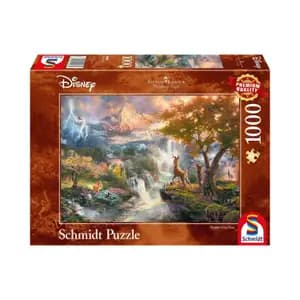
Once you have enjoyed a few jigsaw puzzles, a natural question comes up: should you step up to a bigger one? The leap from 1000 to 2000 pieces sounds like simply twice the work, but the experience differs in several ways. Here is how to decide which is right for you.
The difference is more than double
Doubling the piece count does more than double the time. With 2000 pieces, sorting takes longer, similar pieces are harder to tell apart, and the sheer number on the table can feel daunting. Many puzzlers find a 2000-piece puzzle takes noticeably more than twice as long as a 1000-piece one. It is a genuine step up in commitment, not just size.
There is a practical reason for this. With more pieces, any two of them look more alike, so trial and error increases. A patch of sky that takes ten minutes on a 1000-piece puzzle might take half an hour on a 2000-piece one, because there are simply more near-identical pieces to test.
The pieces are usually a little smaller too. A 2000-piece puzzle is bigger overall than a 1000-piece one, but not double the size, so each piece tends to be slightly more compact. That is worth knowing if you find small pieces fiddly, or if you are buying for someone who prefers a larger, easier-to-handle piece.
When 1000 pieces is the sweet spot
For most people, 1000 pieces is the ideal adult puzzle. It offers real challenge and satisfaction while remaining finishable over a few sittings. Choose 1000 if you:
- Want to complete a puzzle within a week or so.
- Have limited table space.
- Prefer a sense of steady progress without a long-term commitment.
- Are returning to puzzling after a break.
When to step up to 2000
A 2000-piece puzzle suits those who want a proper project. Consider it if you:
- Enjoy a long challenge you return to over weeks.
- Have a dedicated surface where the puzzle can stay out.
- Find 1000-piece puzzles finish too quickly.
- Like the deeper sense of accomplishment a larger puzzle brings.
Space is the practical limit
Often the deciding factor is not patience but space. A 2000-piece puzzle needs a large area both for the finished picture and for sorting piles around it. Before buying, check the finished dimensions on the box and make sure you have somewhere it can live undisturbed. If you would have to clear it away each day, a puzzle mat or board is worth having, or a 1000-piece puzzle may simply fit your life better.